
This is an old revision of the document!
Table of Contents
Le Royaume de Risur
Risur
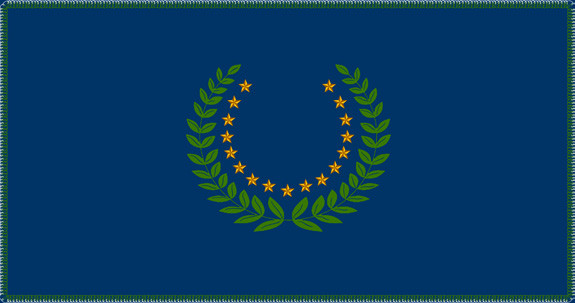
| Capitale: | Slate |
|---|---|
| Gouvernement: | Monarchie constitutionnelle |
| Dirigeant: | Roi Aodhan |
| Langue officielle | Primordial |
| Races | Human 86%, elf 6%, halfling 5%, other 3% |
Every Risuri child knows that before King Kelland, no human nation had ever endured more than a few years in Lanjyr. The mighty
nature spirits known today as the fey titans only allowed the elves
to walk their domain, and they terrorized all others with beasts and
storms and blight. But in 1200 b.o.v. (Before Our Victory), Kelland
subdued the lord spirits of field and forest, of marsh and mountain.
With their grudging blessings, he established Risur.
The people of Risur offered the spirits tithing and tribute, and
eventually lulled them to sleep. What were once uncharted wilds of
fierce beasts and tiny enclaves of elves became a prosperous bastion
of humanity. In the seventeen centuries since, Risur’s rites of rulership have ensured that Kelland’s crown only passes to those mighty
enough to cow the land’s primal spirits should they ever seek to
reclaim their domain.
Land and Culture
Risur is a subtropical country, possessed of vast forests and fertile
fields fed by hundreds of rivers and streams which flow from the
southern Anthras Mountains to the northern shore of the Avery
Sea. Temperatures are warm but comfortable year-round, though
a rainy season strikes near the end of what the northern nations
consider summer.
Even the poorest Risuri can enjoy fresh fruit all year round.
Wealthy foreigners cherish Risur’s pineapples, limes, bananas,
and massive jackfruit, but most prized are its cocoa and sugarcane,
and alcohols made of each. A typical Risuri meal consists mostly of
fruit, beans, bread, and fish, with the occasional beef or pork. Factory workers in Flint seldom can afford quality meat, and instead
make savory stews by soaking bones and sausages in dark beans.
Holiday celebrations often include steaming milk flavored with
either chocolate or honey.
Terrain
Four main landscapes make up Risur. The northern Avery Coast is
dominated by a mix of wooded beaches — where mountainous gran-
ite domes rise out of the sea and anchor dry lands — and forested
swamps, often referred to by the native Elven word bayou — where
the country’s many rivers sweep soil out into broad floodlands.
The Weftlands of Risur are low plains covering most of the western two-thirds of the country, which draw their name from the countless rivers that weave toward the sea like yarn in a cloth. Most
towns and farms lie here, though pockets of wild forests and rocky
hills create uninhabitable divides between provinces.
The land rises to the south, and in the mid-altitude hills an unusual swamp wriggles across the landscape, known as the High Bayou.
Though the hills are uneven, huge numbers of nesting beasts and
giant insects have dammed swaths of the land, slowing the rivers
that flow out of the mountains and ensuring a steady source for rivers year-round. Few Risuri live here aside from villages of elves who
never integrated with the rest of the nation.
Beyond the High Bayou, the rain-carved Anthras Mountains
forms a broad border with Ber. Forests cover most of these moun-
tains, though mining in the east has stripped many peaks. Centuries
of attacks from Ber have kept many towns from flourishing here,
but numerous old forts dot the King’s Road, which runs from the
richest mining lands, all the way north to the capital.
Flint, City of Industry.
The industrial powerhouse of Flint sits nestled among dozens of
granite peaks along the eastern stretch of Avery Coast. With a
rapidly-growing population of over half a million, slums for factory
workers have begun to clump along these steep hills, while builders
work to clear large sections of rainforest from within the city limits.
Small satellite towns cling to the islands outside Flint’s harbor, and
many foreign nations and businesses have flocked to the city to gain
influence in the past forty years.
The Zeitgeist campaign assumes that the pc party is based out
of the Royal Homeland Constabulary branch in Flint.
Slate, the Historic Capital.
Risur’s capital of Slate lies on the banks of the Great Delve River, in
verdant plains fifty miles from the Avery Sea. It is by far the largest
city in the country, with a population of nearly a million people. A
half-dozen major highways converge on Slate, including the King’s
Road. Slate is still the heart of Risur’s internal trade and business,
though more and more international trade goes through Flint.
For people used to living in the bustle of Flint, the city of Slate
appears stately, calm, and perhaps a bit doddering. The Great Delve
River, with its steep banks turning it almost into a man-made chan-
nel, generally separates the city into the noble west bank and the
common east bank.
Six antique castles sit along the inside of a wide bend on the
river’s west bank, arranged in a pattern originally designed to de-
fend against invasion. Each castle acts as a nexus of a community
of elite gated villas, and here live the nobles descended from the
many kings and queens Risur has had throughout history. Today
the district resembles an overly-manicured flower garden, more
pretty than practical.
Across the shore lie dozens of less affluent neighborhoods surrounding the Grand Weft, a massive square where three highways intersect. Wealthy businesses clump along the Lowland Highway,
which leads from the square to docks along the river. The king’s
residence, Torfield Palace, sits atop a broad grassy hill a mile south
of the weft. It is symbolic of the government of Risur that the king
lives with the people, and only once he steps down or dies does his
family move to the west bank.