
Table of Contents
Le Saint Royaume de Crisillyir
Crisillyir
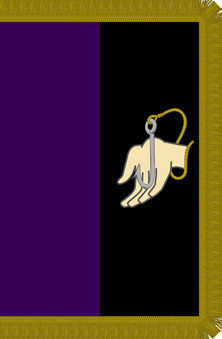
| Capitale: | Alais Primos |
|---|---|
| Gouvernement: | Théocratie élective |
| Dirigeants: | Primus Cardinal Tito Banderesso, Arx Secula Natalia Degaspare |
| Langue officielle | Commun |
| Races | Human 85%, gnome 7%, dwarf 4%, other 4% |
Crisillyir is ruled by the hierarchs of the Clergy, the religion that
freed the nation from demonic rule a millennium ago. Today,
Crisillyir is a rich land, its fields bountiful, its coffers full of colonial gold. Centuries of divine rituals have turned its great cities
into beacons of enlightenment and magical research, though this
prosperity seems to attract attention from supernatural threats.
Elaborate aqueducts feed water from the snowcapped Enfantes
Mountains throughout the nation; it is said that each column
in the aqueduct system is engraved with one chapter from the
Clergy’s holy book, acting as a massive ward against the ancient
evil that still lurks in the land.
In Crisillyir, the power of the church is supreme, but not unquestioned. While the grand summoners conjure forth tortured
specters from the Bleak Gate to cow their flocks into piety, collegial arcanists debate conceptions of the cosmos that do not
match church dogma. Fat merchant lords pay lip service to the
faith, sell weapons and ritual components to eladrin assassins,
then purchase indulgences to absolve themselves. And though
the inquisitive halo-bearing geneu credetos (‘spirits of belief,’ or
more commonly ‘godhands’) are tasked with guarding the nation
from unholy, fey, and undead influences, criminal organizations
nevertheless manage to smuggle in contraband and use resurrec-
tions to extort even the dead.
The Clergy
According to the church’s holy text, one thousand years ago a
human fisherman named Triegenes from what today is Danor
discovered the secret of divinity while lost in a storm at sea. He
returned and preached about the divine spark within all mortals,
and how by constantly challenging oneself, a person can become
like a god. He inspired followers to fight beside him, and together
they toppled tyrants, slew legendary monsters, and eventually established a new nation, based upon a hierarchy of divinity, where
rank and reward were based solely on merit.
After his kingdom was established, Triegenes undertook the greatest challenge left in the mortal world: to defeat the Demonocracy that
oppressed the lands to the east. He confronted the abyssal lords who
had taken residence on this world, sacrificed himself to banish them
forever, and then left his mortal shell and ascended to godhood.
The Clergy believe in many gods, with no pinnacle godhead, but
they preach foremost the teachings of Triegenes, that every man
has greatness within him, and he merely needs to be challenged
to awaken his potential. And while a thousand years have burdened this original message with a complex celestial bureaucracy,
vaguely-interpreted visions of a multiverse of planes, and a strong
emphasis on the superior potential of humans above all other races,
the simple dogma that anyone can improve their life, and that
indeed this is the main purpose of life, holds strong appeal. The
Clergy is now the most widespread faith in Lanjyr.
Cities
The capital city Alais Primos is dominated by massive temples, sepulchers, and libraries, some so large they straddle the canals that
run through the city. Massive and enchanted walls once surrounded it, holding back the eladrin armies, and while the city has long
since expanded beyond their boundaries, their magic still defends
the heart of the city. Since the Clergy views the godless tieflings of
Danor as apostates, industry and technology are forbidden in Alais
Primos. Confiscated items are ritually disposed of in a fiery rift of
Enzyo Mons in the nearby mountains, symbolically casting back
the tools of evil.
The island city of Sid Minos is site of the nation’s greatest naval yards and its military academies, which train paladins and
warpriests to hunt unnatural beasts, as well as fight foreign armies.
Tunnels and dungeons riddle the rocky island beneath the city, and
undead horrors occasionally emerge from these dark lands, but
their source is unknown. Because the hierarchs view Sid Minos as
already somewhat tainted, they allow technology onto the island.
Off the shore lies the Isle of Odiem, home to the Crypta Hereticarum, where the Clergy stores the most vile cursed beasts and
objects that they cannot simply destroy.
An isthmus connects Crisillyir and Elfaivar, and the city of Vendricce has grown fat from taxing trade through its gates, including
the Avery Coast Railroad that terminates here. A grand arched
bridge that once spanned the channel between the two nations was
destroyed during the Second Victory, but Danor is funding its repair, hoping to extend the railroad so it can feed through the city
and into Elfaivar.
Colonies to the East
After the eladrin empire fell in the Second Victory, Crisillyir and
the other conquering nations established garrisons within the collapsing eladrin nation, and divided the land into several colonies.
Despite the great wealth these colonies provide, they are a thorn in
Crisillyir’s side; intermittent rebellions and acts of terrorism target
the colonial governors and their allies in the homeland. At least
once a decade, a spree of assassinations strikes, shaking the complacency of the nobility, and frightening the common folk.
The largest colonial city is Santi Simone, over the ruins of
Elfaivar’s original capital Bharata. In an uncharacteristically sym-
pathetic move, the Clergy built a giant memorial to the countless
dead eladrin women, interring their bodies in tombs carved into a
massive rock that sits along the city’s river.
Devas, Angels, and the Dead.
The Humble Hook
When Triegenes passed on from his mortal
shell, the prelates of the Clergy cremated
his remains in a grand state funeral. As
they gathered his ashes to spread across
the nation’s soil, they found a small harpoon
hook—the kind used by some fishers— which
somehow had been caught in the living god’s
body since before he achieved divinity.
The priests crafted the hook into a pendant,
and for over a thousand years it has been
worn by the hierarchs of the faith, as
a reminder that we all have humble origins.
Doctrine claimed that it let its wearer
learn the history and background of anyone
he met, allowing the leader of the faith
to deal with overly prideful enemies and
heads of state.
In 260 a.o.v., however, it was lost when
an eladrin assassin slew that era’s
hierarch and stole the pendant. Critics of
the faith claim that its loss was part of
a plan to steer the Clergy away from its
original humble core, so that high priests
could better profit from their stations.
The Second Victory ended with a legendary battle just outside the
walls of Alais Primos, where legions of Clergy-blessed warriors
faced an army led by the goddess Srasama herself. After hours of
battle, Srasama was felled by a thousand cuts, and fire exploded
from her body. The warriors nearest to her were annihilated, but
those who survived and were close enough to see the death of a god
were marked by the experience.
Many of these veterans settled in the lands liberated by the
eladrin army’s retreat. In the years that followed, whenever one of
them died, open flames would flicker for miles around, and some-
where within three days’ travel the man or woman would be reborn
in the wilderness. No longer quite human, these reincarnated souls
took the name deva, from an eladrin word for deity.
When a deva reincarnates, he recalls language, culture, and
enough knowledge to make his way in the world, but usually pos-
sesses only vague recollections of his previous life. Acquaintances
are unfamiliar, and expert skills like magic, craftsmanship, or
swordplay fade, but usually the deva quickly slips into the same ba-
sic role he held before death.
Where devas are rare, one that dies is usually found quickly after
reincarnation, and after a period of acclimation he will manage to
continue as if nothing had happened at all. In Crisillyir, though,
devas are common enough that they seldom manage to return to
their previous lives. In either case, devas still fear death because it
means an end to all they are. While a reincarnated deva might be
able to continue the same mission, he’ll never recreate the emotions
and memories that made him unique.
Many devas find a place in the Clergy, where through special
training they can act as vessels for invoked celestial beings. Such
angelic visitations never last long, and occasionally result in the
death of the vessel, so they are only used in situations where the
priesthood feels inadequate to answer questions of guilt or opine on
matters of morality.
In a similar way, on certain bleak holy days the priests of the
Clergy will reach through the veil into the Bleak Gate and capture
uneasy spirits, which they parade in front of crowds of worshippers.
Compelled by magic, these undead specters wail about the sins they
committed in life that left their souls trapped in ‘Purgatory.’ The
priests then offer absolution, and destroy the unholy beings.
The Family
One of the few chinks in the strong face the Clergy presents is a
criminal organization known as the Family. Most people only know
of them in rumors and hearsay, but it is said that they are behind
most of the crime on both sides of the Avery Sea.
Where they have taken root, crime becomes civilized. The Family seems to respect loyalty and avoids doing violence to innocents,
though when they move into a new city they viciously cut out the
current criminal element and institute a more refined form of corruption and lawlessness.